Comparing Dead And Live Loads In Roof Truss Design
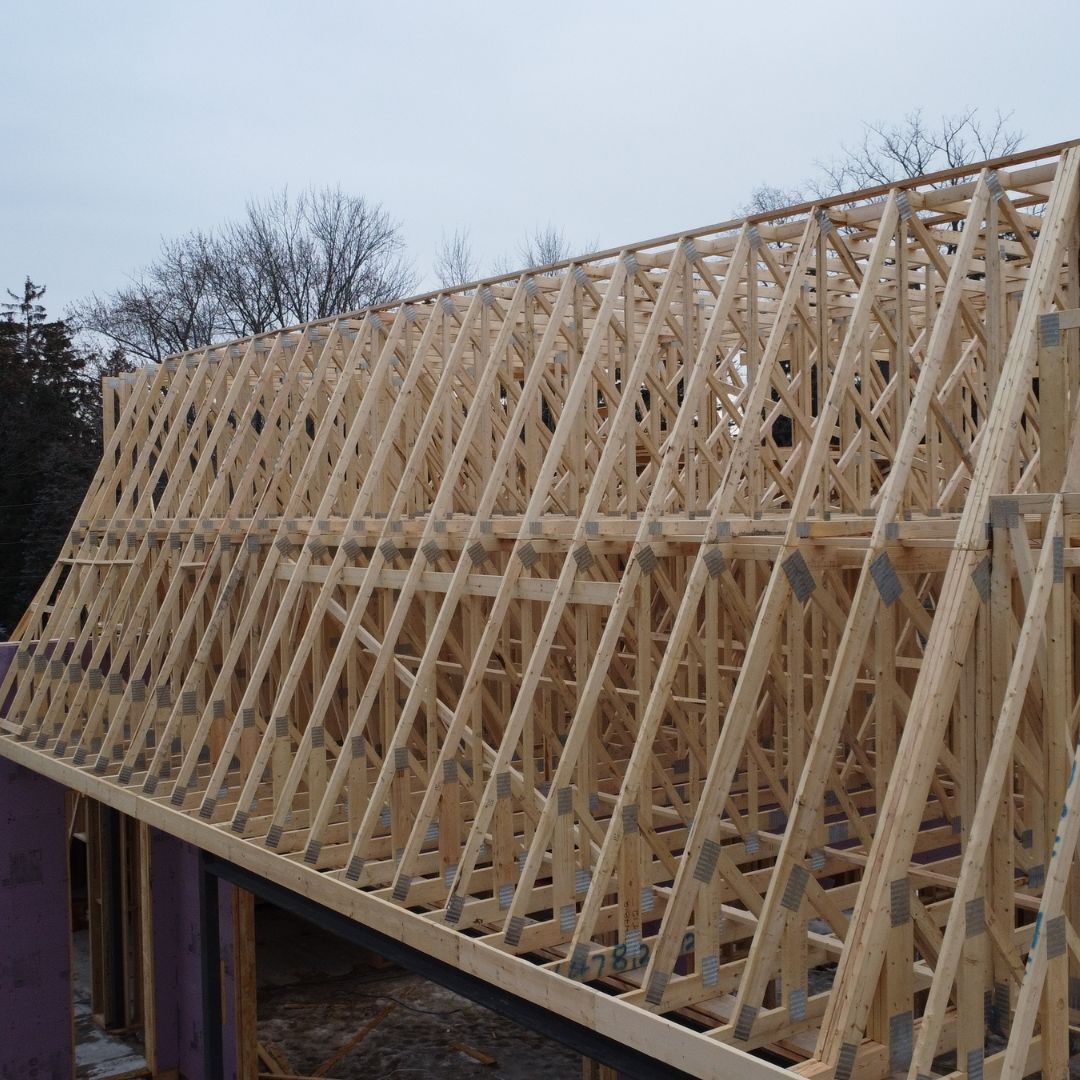
When it comes to roof truss design, the major loads to consider are dead and live loads. How are they defined, what are their characteristics, and why are they considered important? In this blog, Tamarack Lumber Inc., a major manufacturer of roof trusses in Burlington, Ontario, explores these questions in detail.
What Is a Dead Load in Roof Truss Design?
Dead load is defined as the weight of various structural components resting atop the roof truss. This load is considered permanent and stationary. Classic examples include the weight of the roof truss itself, roofing components such as shingles and tiles, roof sheathing elements such as plywood, ceiling finishes including drywall, insulation, light fixtures and ductwork.
What Is a Live Load in Roof Truss Design?
In the context of roof trusses, a live load is defined as the load acting on the truss that is dynamic and movable. Weather-related loads such as snow, ice and rain fall under this category. Moreover, factors like maintenance workers, temporary equipment and other variable factors are also under the category of live loads.
The main distinguishing characteristic of a live load is that it is not permanent, and the load can change drastically. To counter this, some design codes are needed to specify the minimum amount of live load that can act upon the roof truss.
Why Is It Important to Calculate Dead and Live Loads?
Dead and live loads are important factors to consider when designing roof trusses because they determine the safety of the building, the workers installing the truss and the residents who will live under it. The builders and designers have to ensure that the roof truss can handle its own weight, along with the loads mentioned above. Otherwise, there is a risk of the truss collapsing or deflecting, causing major safety and structural issues.
Conclusion
In summary, dead and live loads are mainly distinguished by their nature. The former is constant and unchanging, whereas the latter is variable and temporary. However, it is essential to calculate both during roof truss design to ensure structural integrity.
To learn more about different types of roof trusses, contact us at Tamarack Lumber Inc. today. As one of the leading roof truss manufacturers and distributors in Burlington, Ontario, our quality products cater to a wide variety of residential and commercial projects. Give us a call at 905-335-1115 for more details.
FAQs:
What are other loads to consider when designing roof trusses?
Seismic loads and impact loads are also considered when designing roof trusses.
What are the benefits of prefabricated roof trusses?
Design flexibility, structural stability, faster installation times and low cost are advantages of a prefabricated roof truss.