How To Design Roof Trusses For Flood-Prone Regions?
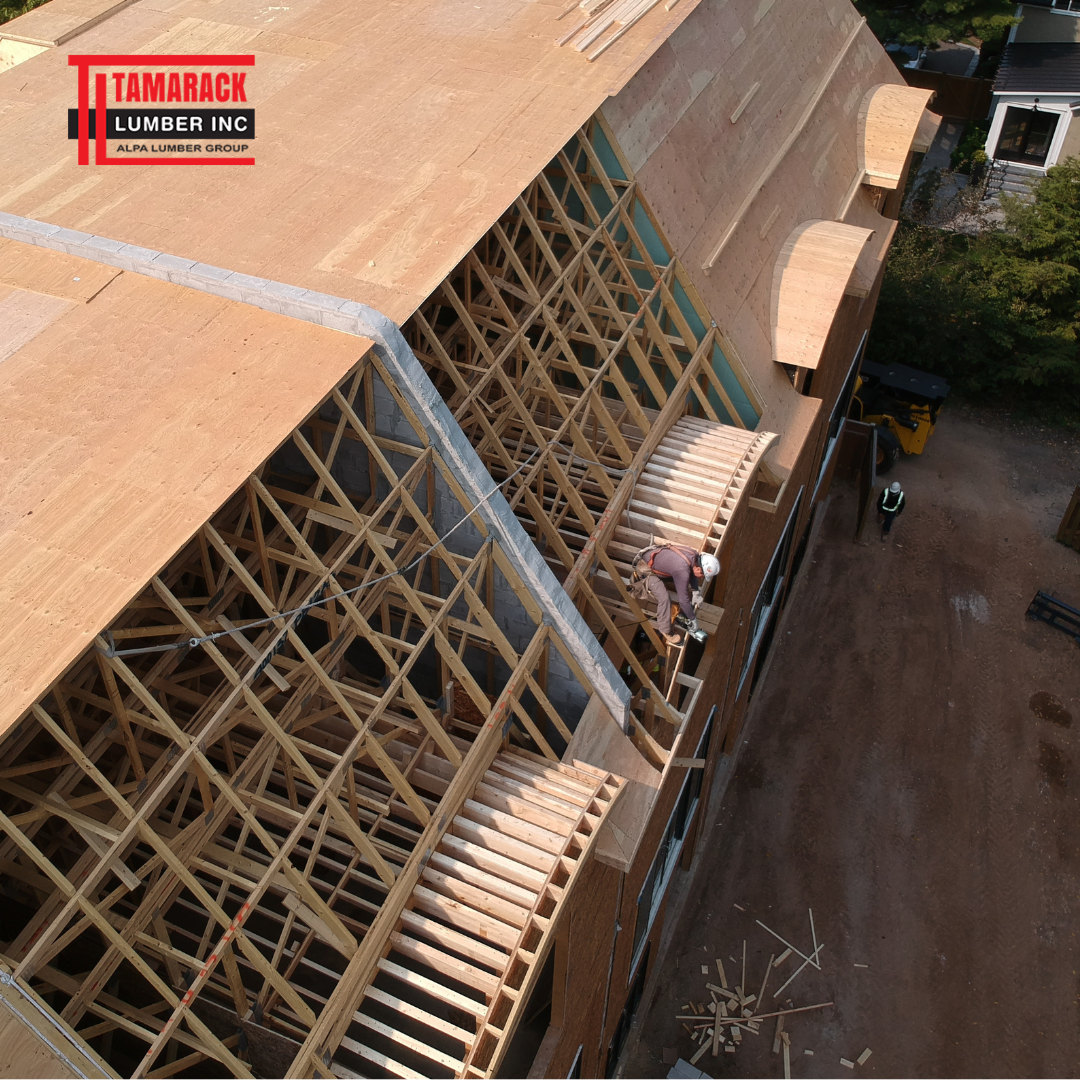
To properly design roof trusses for flood-prone regions, focus on roof type, minimizing overhangs, calculating wind uplift and choosing the right material. Tamarack Lumber Inc., a major roof truss designer and manufacturer in Burlington, Ontario, explores these 4 factors in detail in this blog.
What To Consider When Designing Trusses For Flood-Prone Areas?
Roof Type
Choosing the type of roof is important when considering roof trusses for a flood-prone area. This is because of the design of the roof, which is sloped in all four directions. This makes it more aerodynamic and resistant to wind, as well as making it easy for rainwater to fall off. Naturally, the best roof truss design for this roof is a hip truss, as it emulates similar properties.
Overhang Size
Since water collection is a concern, keep overhangs of the structure to a minimum. The larger the more the probability is of wind accumulating underneath and potentially lifting up the roof. To prevent this, it is advised to keep the overhangs within 18 inches.
Wind Uplift
Wind uplift is a major consideration when designing roof trusses for a floor-prone region. This is the wind force acting on the roof and truss, causing it to lift up. This is a critical calculation, as without it, there is a high probability of the roof being blown away or compromising its structural integrity during inclement weather.
Material
Lastly, the material of the roof truss has to be taken into consideration as well. Pressure-treated lumber is an excellent choice for regions experiencing a lot of rainfall or flooding, as it offers resistance against moisture and decay, which might damage or rot regular wooden roof trusses.
Conclusion
In closing, all these factors can help design a roof truss for regions that experience cyclonic weather, intense snowfall, or flooding.
To learn more about different types of roof trusses and roof truss designs, contact us at Tamarack Lumber Inc. today. As one of the leading roof truss manufacturers and distributors in Burlington, Ontario, our quality products cater to a wide variety of residential and commercial projects. Give us a call at 905-335-1115 for more details.
FAQs:
Is bracing required for roof trusses in flood-prone regions?
Bracing, while not necessary, can be an excellent addition to improve the structural integrity of a roof truss.
What are some other benefits of pressure-treated timber?
Pressure-treated timber minimizes warping or twisting when wet, thus preserving the structural integrity of the roof truss.